

Highlights from our “Scaling Democratic Innovations” launch
Read the paper, watch the recording, and explore key takeaways from our speakers on infrastructure, ecosystems, and long-term democratic change


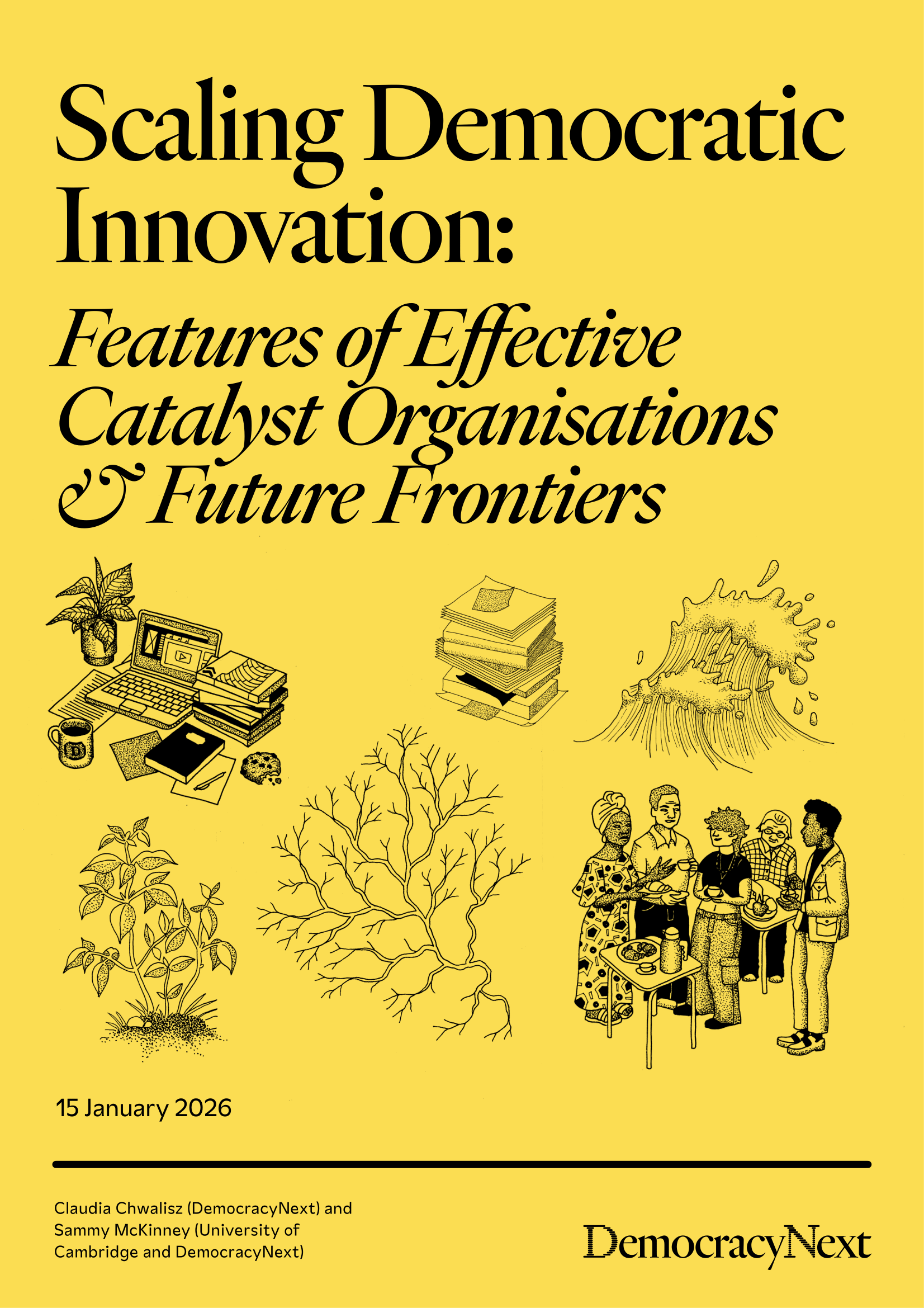
In last week’s virtual event, over 200 of you joined us from around the world for the launch of our newest paper, “Scaling Democratic Innovations: Features of Effective Catalyst Organisations & Future Frontiers”. Since then, we’ve had over 700 readers and almost 900 views on our recording!
The discussion we hosted was candid and grounded - exploring what scaling looks like once the excitement of innovation meets political reality.
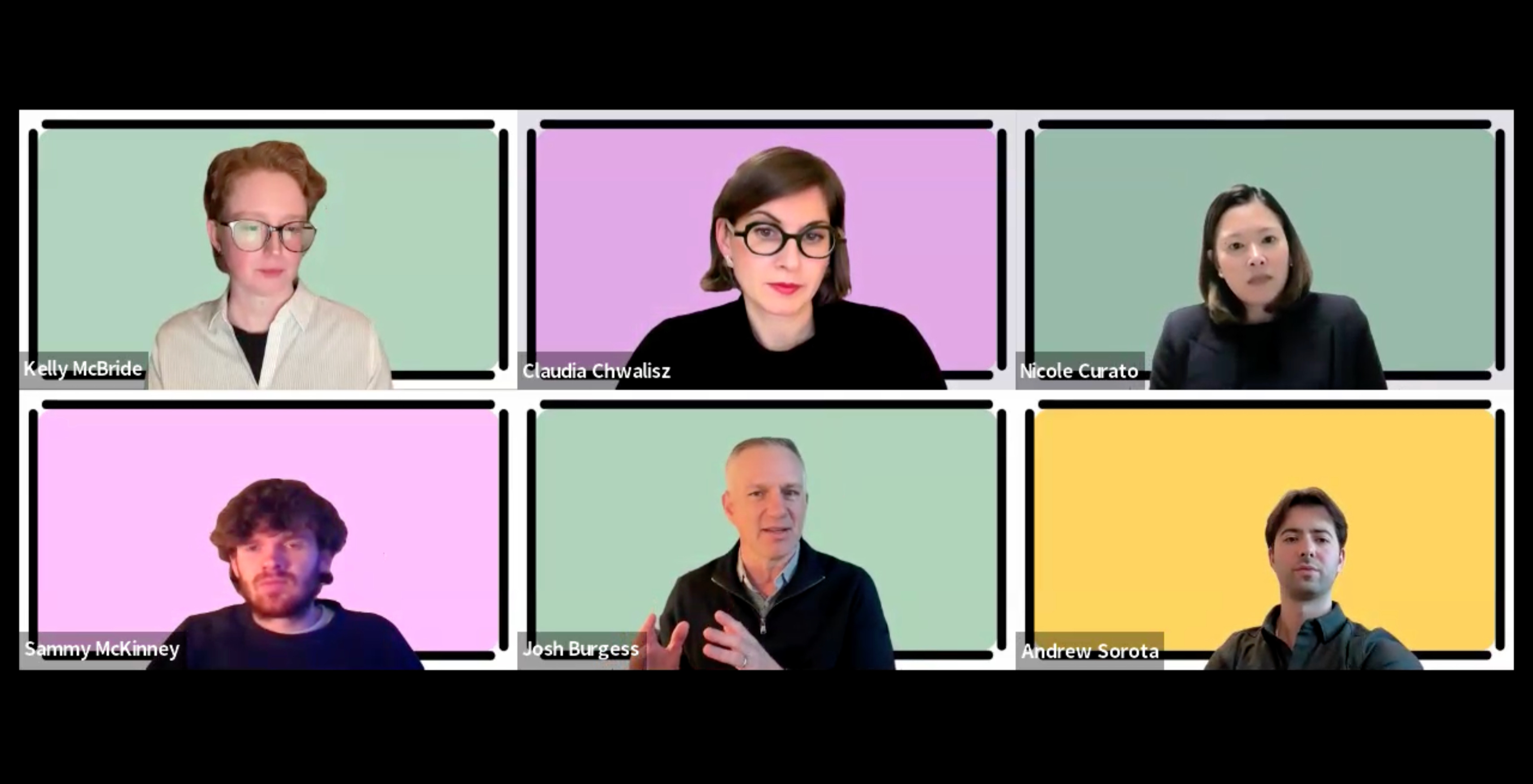
Authors Claudia Chwalisz and Sammy McKinney were joined by Nicole Curato (University of Birmingham), Josh Burgess (DemocracyNext and Central Oregon Civic Action Project), and Kelly McBride (Involve), who reflected on what it really takes to embed deliberation in democratic systems in a vivid conversation moderated by Andrew Sorota (Head of Research, Office of Eric Schmidt).
“If we want systemic democratic change, we can’t just commission one-off assemblies. We need to invest in the civic infrastructure that sustains them.” - Claudia Chwalisz
In today’s newsletter, you can engage with the research in a few ways: flick through the presentation slides, read the paper, watch the recording, and explore highlights from each speaker below.
Nicole Curato (Professor, University of Birmingham) opened by reminding us that “scaling” is not a new question - it has been central to academic debates on deliberative democracy for decades, even if the language has changed. What this paper does differently, she argued, is open the black box of how democratic innovations become embedded in real political systems: through relational work, infrastructure building, and careful attention to context. Scaling, in other words, is not replication; it’s systems work.
“Connections to power are essential, but proximity to power also comes with risks. Democratic innovations have to balance influence with integrity.” - Nicole Curato
Nicole also pushed the conversation into more difficult territory: if scaling is not a goal in itself, then what are we trying to achieve? Legitimacy? Inclusion? Redistribution of power? Incremental reform or radical change? Different answers, she noted, demand different strategies - and come with different risks. This is a normative question the field can’t afford to dodge.
Finally, she highlighted a tension many practitioners know well: proximity to power. Being close enough to influence decision makers can unlock impact, but it can also compromise integrity. Some see this as a balancing act; others argue democratic innovations should disrupt power rather than court it. That disagreement, Nicole suggested, isn’t a weakness, it’s a sign the field is maturing.
Josh Burgess (Senior USA Advisor, DemocracyNext and Director, Central Oregon Civic Action Project (COCAP)) grounded these questions in practice, drawing on his experience building civic infrastructure in Central Oregon. From the outset, he explained, the goal was not a one-off assembly, but something durable - which meant investing heavily in relationships, trust, and quality before thinking about scale. That choice slowed things down, but it also made broader impact possible.
“These processes aren’t meant to replace institutions. They’re meant to augment them - to rebuild trust and widen who has a seat at the table.” - Josh Burgess
Josh spoke candidly about the tensions practitioners navigate daily: independence versus influence, experimentation versus institutionalisation, and standardisation versus local adaptation. For their first civic assembly, quality had to be non-negotiable, even if that meant higher costs and fewer shortcuts. Mistakes were inevitable, but learning publicly was part of building legitimacy.
Looking ahead, Josh raised a provocative idea: “catastrophic success.” If democratic innovations really begin to shift power and norms, pushback is inevitable. Preparing for that moment - politically, organisationally, and narratively - is part of responsible scaling.
Kelly McBride (Director - Capacity Building & Standards, Involve) zoomed out to the wider civic ecosystem, arguing that scaling democratic innovation is fundamentally an infrastructure challenge. Great processes alone aren’t enough - without skills, relationships, standards, and sustained capacity, even high-profile assemblies risk becoming hollow. Making participation part of everyday democracy requires patient investment in the often “boring” stuff.
“Scaling democratic innovation isn’t just about better processes - it’s an infrastructure challenge.” - Kelly McBride
Mainly drawing on experience in Scotland, Kelly described what infrastructure can look like in practice: dedicated participation units inside government, training pathways for practitioners, quality frameworks across institutions, and long-term partnerships with civil society. These foundations take time and political will - but without them, democratic innovation is built on sand.
Crucially, Kelly reminded us that many of the most important actors aren’t labelled “democracy innovators” at all. Youth workers, community organisers, local development staff - these are the people holding trust, knowledge, and relationships in communities. If we’re serious about scaling out and deep, they must be resourced as partners. Scaling democracy, she concluded, isn’t about one organisation doing everything - it’s about connecting an ecosystem that already exists.
“Technological tools don’t scale democracy on their own — their impact is shaped by social, political, and institutional contexts.” - Sammy McKinney
Watch the full recording and read the paper to explore these ideas in depth - and to join the ongoing conversation about what it really means to scale democracy, well.
“If earlier conversations focused on what scaling means, this one is about how it actually comes into being.” - Andrew Sorota.
📢 On the radar
Daniel Innerarity on AI and democracy - An interview with the political philosopher on why democratic judgement can’t be replaced by algorithmic decision-making.
UK Parliament to trial citizen-assembly-style events on immigration - Public deliberation will inform select committee scrutiny.
Mayor Zohran Mamdani establishes NYC Office of Mass Engagement - A new office will coordinate public participation across New York City.
Citizens decide £100,000 cultural investment in the West of England - A citizens’ assembly will pilot ideas to broaden access to arts and culture across the region.
🗓️ Events
22 January, Berlin, Germany
We’re co-hosting the first Democracy Stammtisch of 2026 with our friends at the Better Politics Foundation in Berlin. Come grab a drink, meet fellow democracy enthusiasts, and let’s chat about how we can advance 𝘣𝘦𝘵𝘵𝘦𝘳 𝘱𝘰𝘭𝘪𝘵𝘪𝘤𝘴 together in 2026!
23 & 24 January 2026, Berlin, Germany
Claudia will be co-hosting a workshop with Kyle Redman from the AI & Democracy Foundation on deliberative technology during the Political Tech Summit.
4 February, online
Join Claudia and Nathan Krinch as they explore the question, ‘AI and the Planet: Can Democracy Survive AI?’, as part of a webinar series organised and hosted by RSA Fellowship.
11 February, London, UK
The RSA are hosting Youth Democracy with Wonderfuture, a 90-minute interactive session bringing together 18–30-year-olds with journalists, fact-checkers, and digital media voices to explore how we know what to believe - and why that matters for democracy.
Everyone's asking "how did he win?" No one's asking "why did the system think it couldn't lose?"
In 2024, voters rejected the permanent machine itself. Trump named it. They believed him. But understanding how that machine was built—and why it's still dangerous—requires seeing the full blueprint.
I've mapped the Deep State from 1905 to today: the architecture, the 2016–2024 war against Trump, and why the same playbook is firing everywhere now. 15 pages, classified-style, system maps included. $1.
You're either in the room understanding how power works, or you're guessing in the dark. This closes that gap.
https://open.substack.com/pub/geopoliticsinplainsight/p/us-2024-elections-trump-vs-the-deep?r=72pxma&utm_campaign=post&utm_medium=web