

Notes from a Gambian citizens’ assembly
Find out what happens when citizens take the lead on climate and community

“This was the first time this happened in The Gambia, but it brought out so much. I feel like it should be something we do on a regular basis, not only one off activities.” - Cherno Gaye, Assembly Facilitator
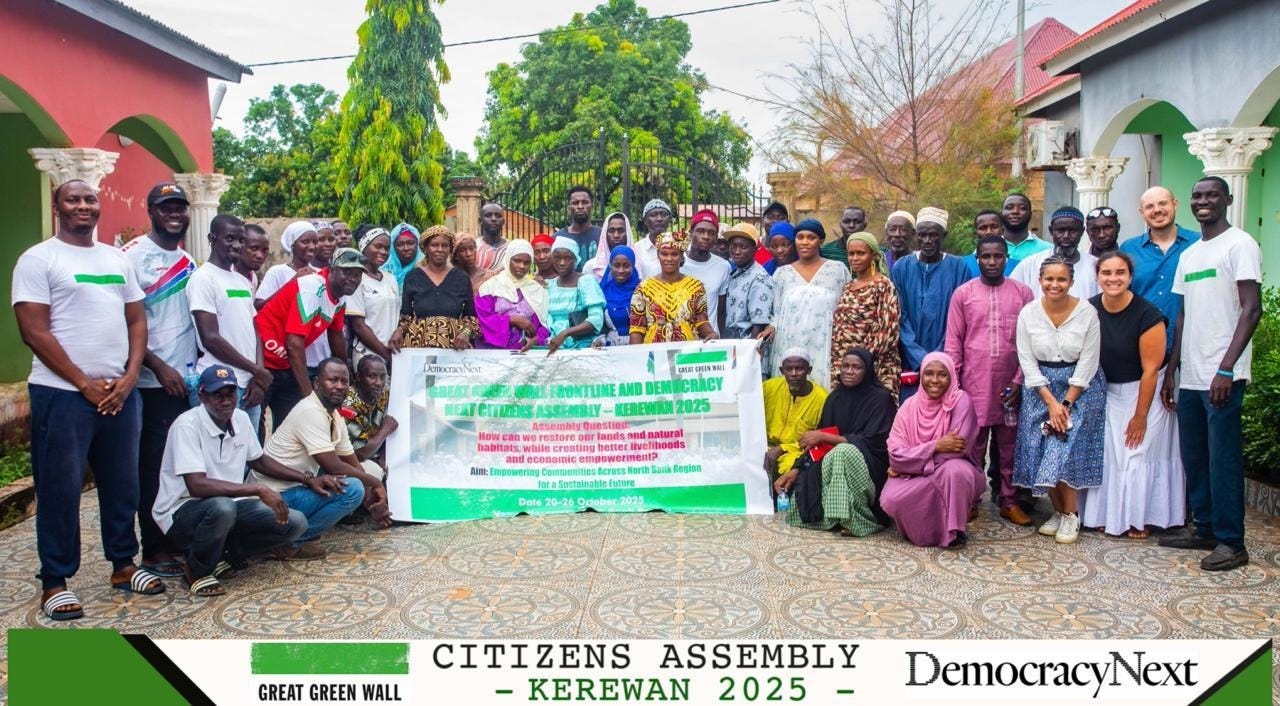
Earlier this month, DemocracyNext’s Cities Programme team James MacDonald-Nelson and Hannah Terry travelled to Kerewan, the administrative capital of North Bank Region in The Gambia, to witness something transformative: a citizens’ assembly exploring how the region can restore and protect its environment while strengthening livelihoods and local economies in the face of climate change.
Over four days, 30 people from over 20 villages across the North Bank Region - farmers, teachers, small business owners, and students, aged from 18 to 66 - gathered to share their experiences of a changing environment. Randomly selected from each of the seven districts, they came together not as representatives of parties or organisations, but as citizens entrusted with shaping recommendations for their community’s future.
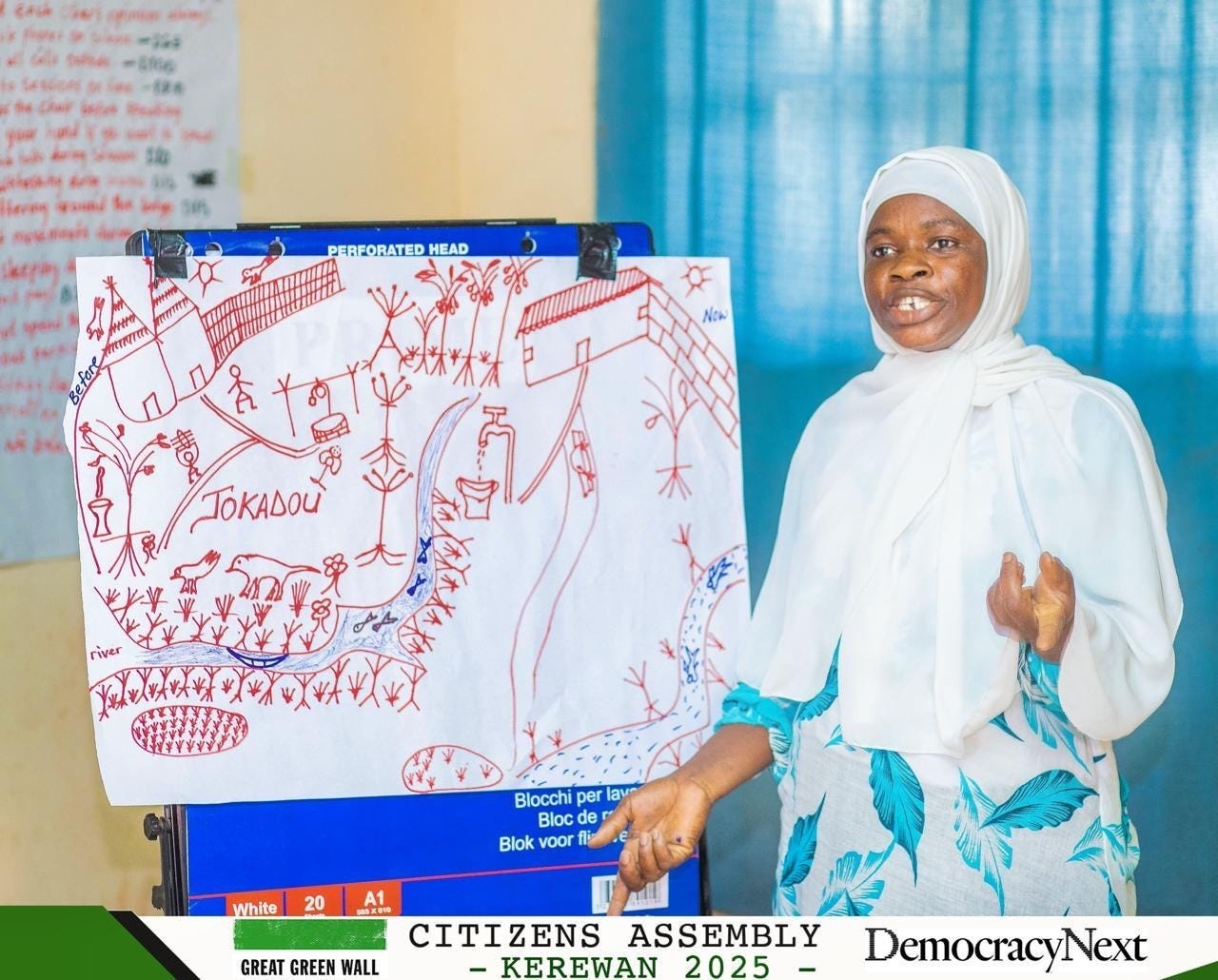
The conversations were rich and grounded in local realities. Participants mapped their villages and livelihoods, discussed the roots and branches of environmental challenges through a “problem tree” exercise, and worked collectively to define key priorities. Expert commentators from ActionAid’s Global Platform and the University of The Gambia contributed perspectives on resilience, agriculture, and restoration. The discussions moved fluidly between Wolof, Mandinka, and occasionally English.
For the facilitators, this was unlike any community meeting they had organised before. The random selection process brought together people they might never have otherwise met - people whose knowledge and experience are often missing from public decision-making spaces. Across the room, young women stood to speak, elders reflected on decades of change, and the sense of shared purpose was palpable.
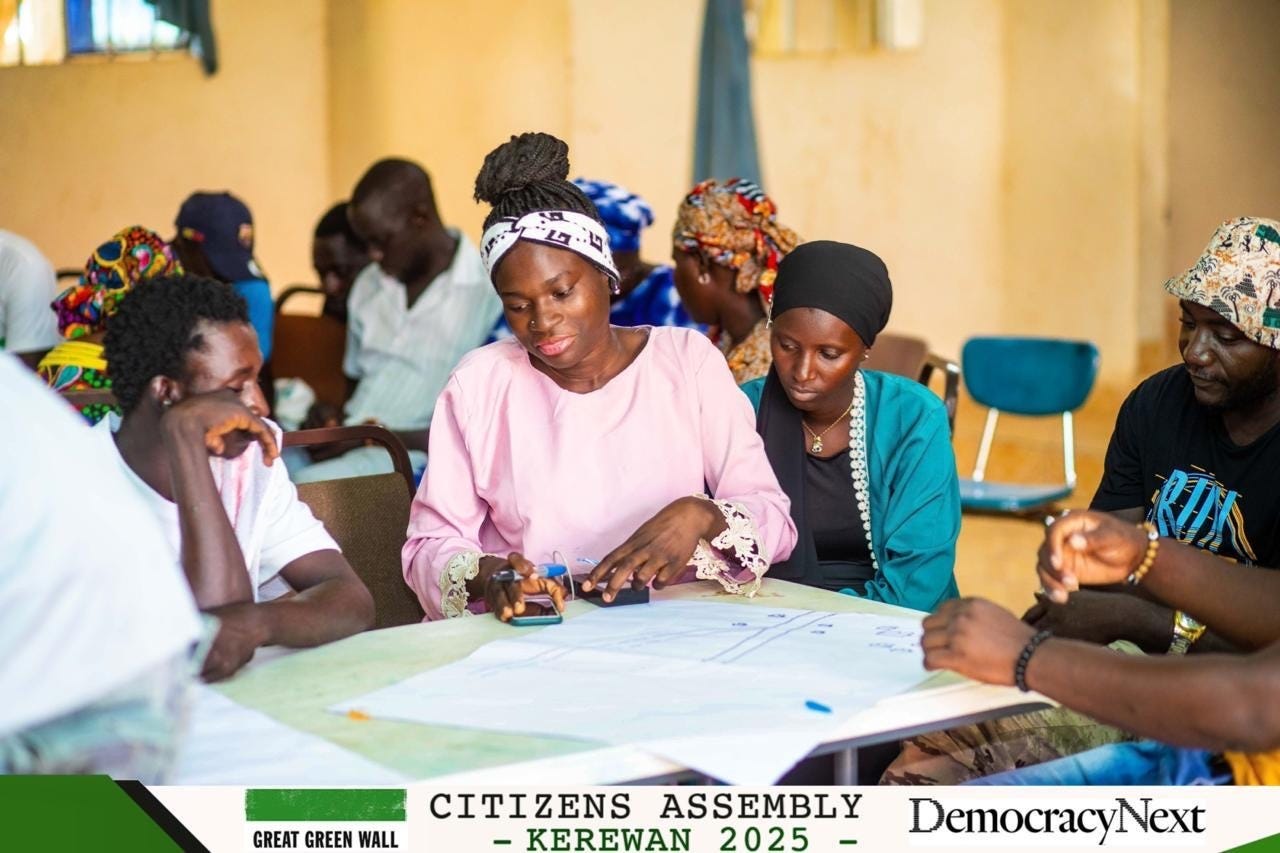
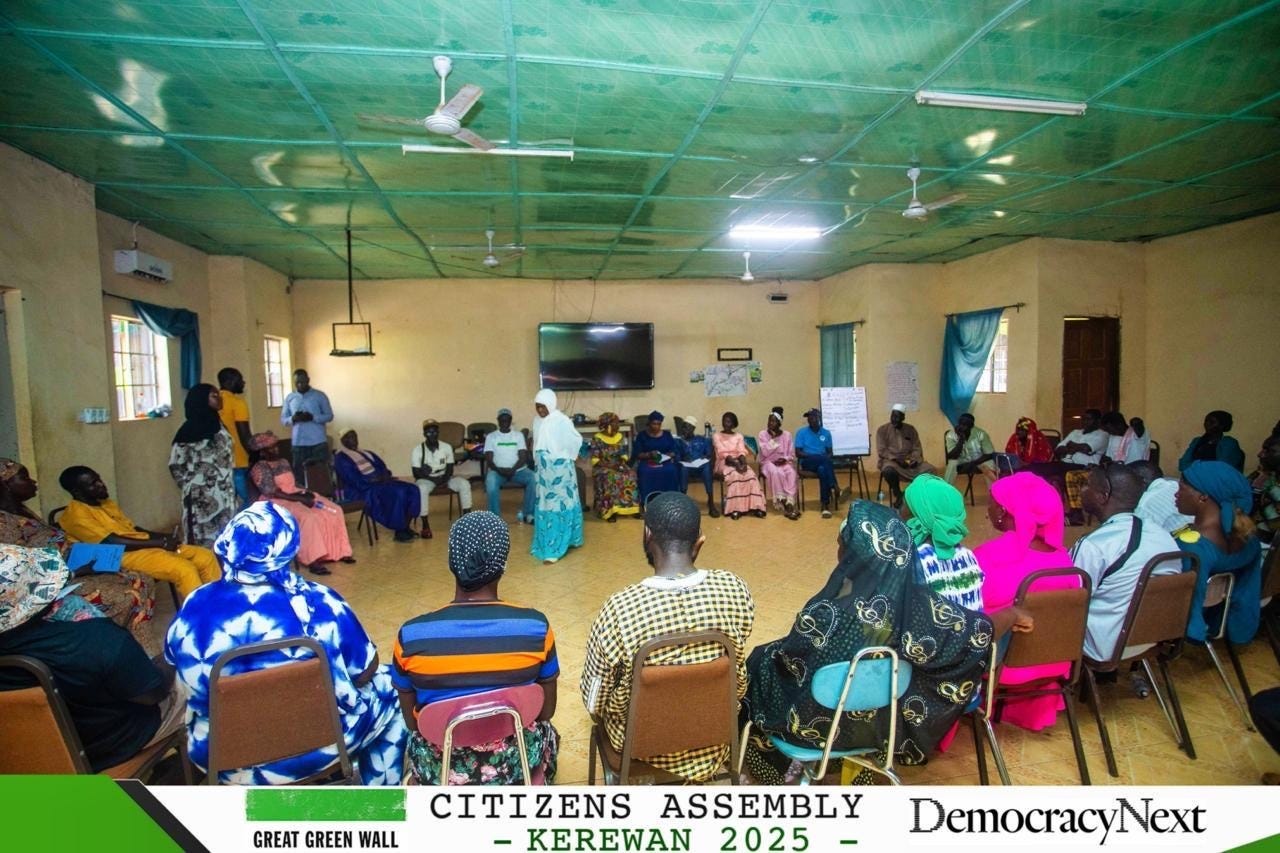
On the final day, the assembly presented its draft recommendations to local leaders and policymakers. The District Governor, Deputy Governor, a Member of the National Assembly, and representatives from the women’s and disabled persons’ associations, and civil society all attended. Their presence - and the seriousness with which they engaged - sent a powerful signal; that citizen voices are being heard. Several spoke about the importance of continuing such processes, particularly on an issue as urgent and complex as climate change.
One of the key recommendations calls for the inclusion of assembly members into District Climate Resilience Committees which currently function as working groups. This signals citizens’ desire for deeper participation and their commitment to continue engaging with climate governance beyond the assembly’s conclusion.
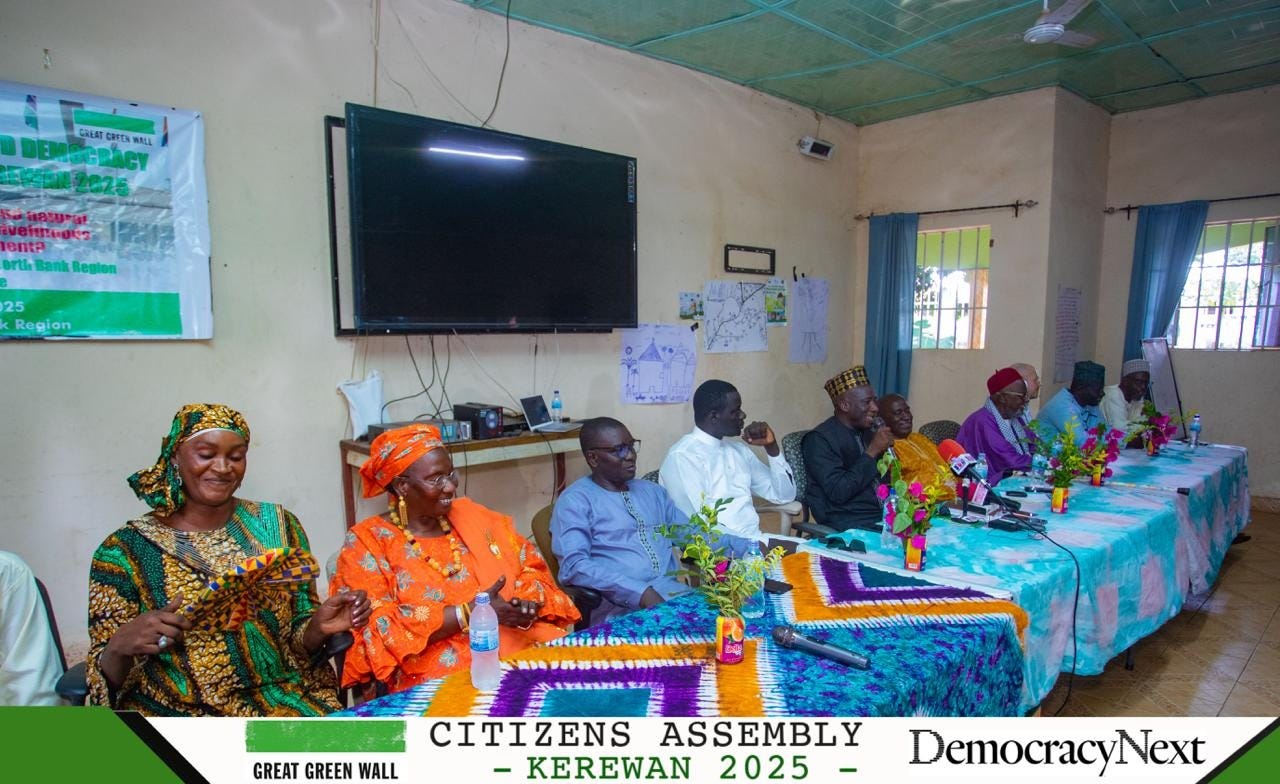


In the coming weeks, the assembly facilitators and the Great Green Wall Frontline Initiative team will finalise the written report and follow up with stakeholders to discuss how the recommendations can inform local and national action. Evaluators from Gambia-based CepRass (The Center for Policy, Research and Strategic Studies), a research partner, will also interview assembly members and decision-makers to document lessons from the process.
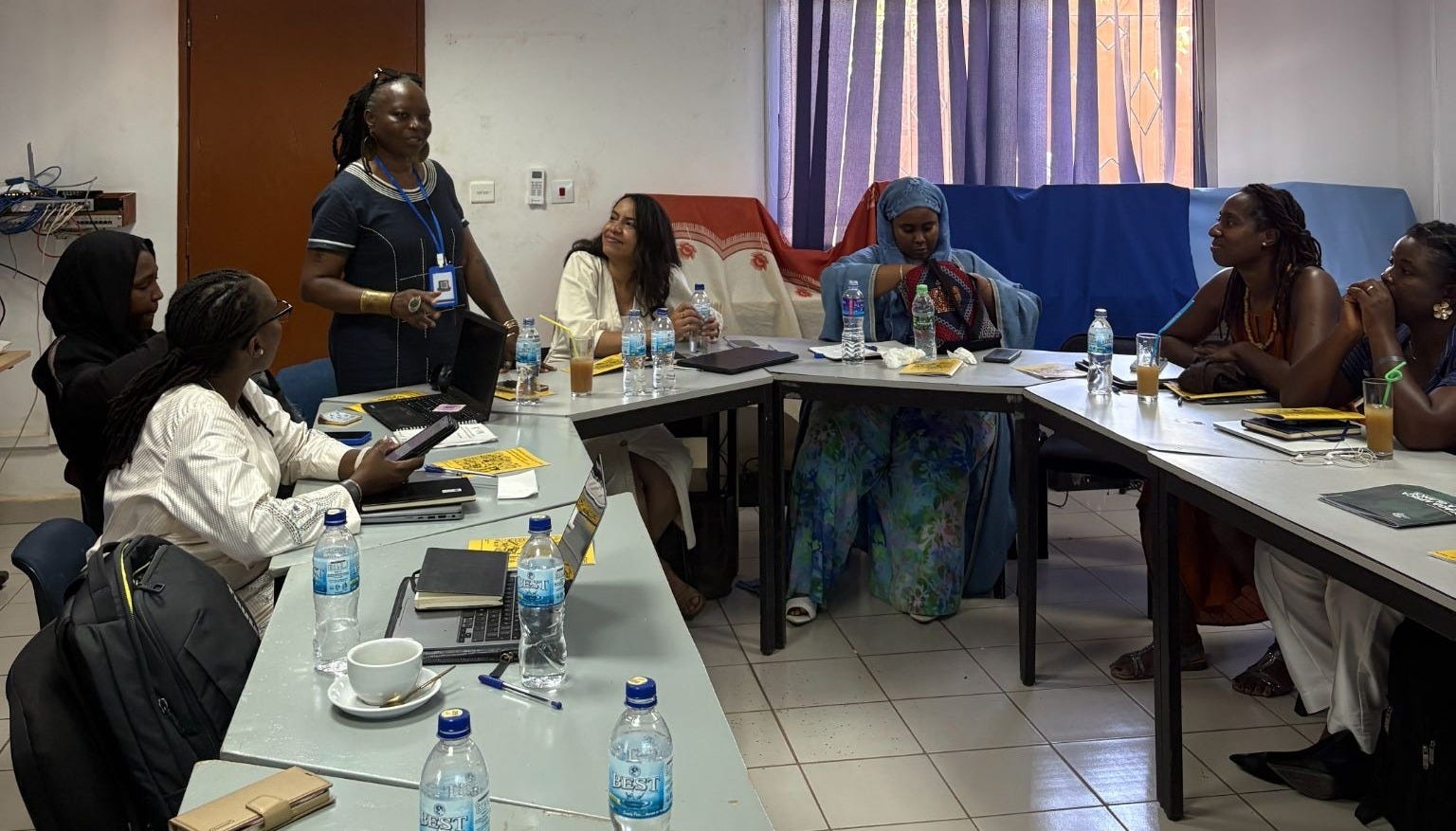
While in The Gambia, our team also hosted a regional convening at the Alliance Française in Banjul, bringing together practitioners and researchers from across Africa - including those working on deliberative and participatory processes in The Gambia, Kenya, Senegal, Nigeria, Morocco, and South Africa, along with virtual participation from a key organiser involved in the 2020 Salima Citizen Jury in Malawi. They exchanged insights on citizens’ assemblies and participatory innovations.
Preliminary research findings from the comparative research study on citizens’ assemblies in African contexts, commissioned by DemocracyNext and authored by Rorisang Lekalake and Stephen Buchanan, were also presented. Their study presents a comprehensive overview of several citizens’ assemblies that have taken place across the African continent - from Mali, to Malawi, The Gambia, and next year’s climate assembly in Cape Town, South Africa. The authors will look at the design elements, as well as the political and cultural contextual elements of each assembly, and will offer insights for the future. It will be published in January - watch this space!
Together, convening participants explored questions of political will, community engagement, traditional knowledge systems, and what authentic participation looks like in different contexts. The sessions were lively, generous, and deeply reflective.
As one participant put it, “It wasn’t a conference. It was a conversation.” Across the discussions, a shared vision emerged: that deliberative democracy must adapt to place - to language, culture, and life experience - while staying true to the principles of inclusion, fairness, and thoughtful dialogue.
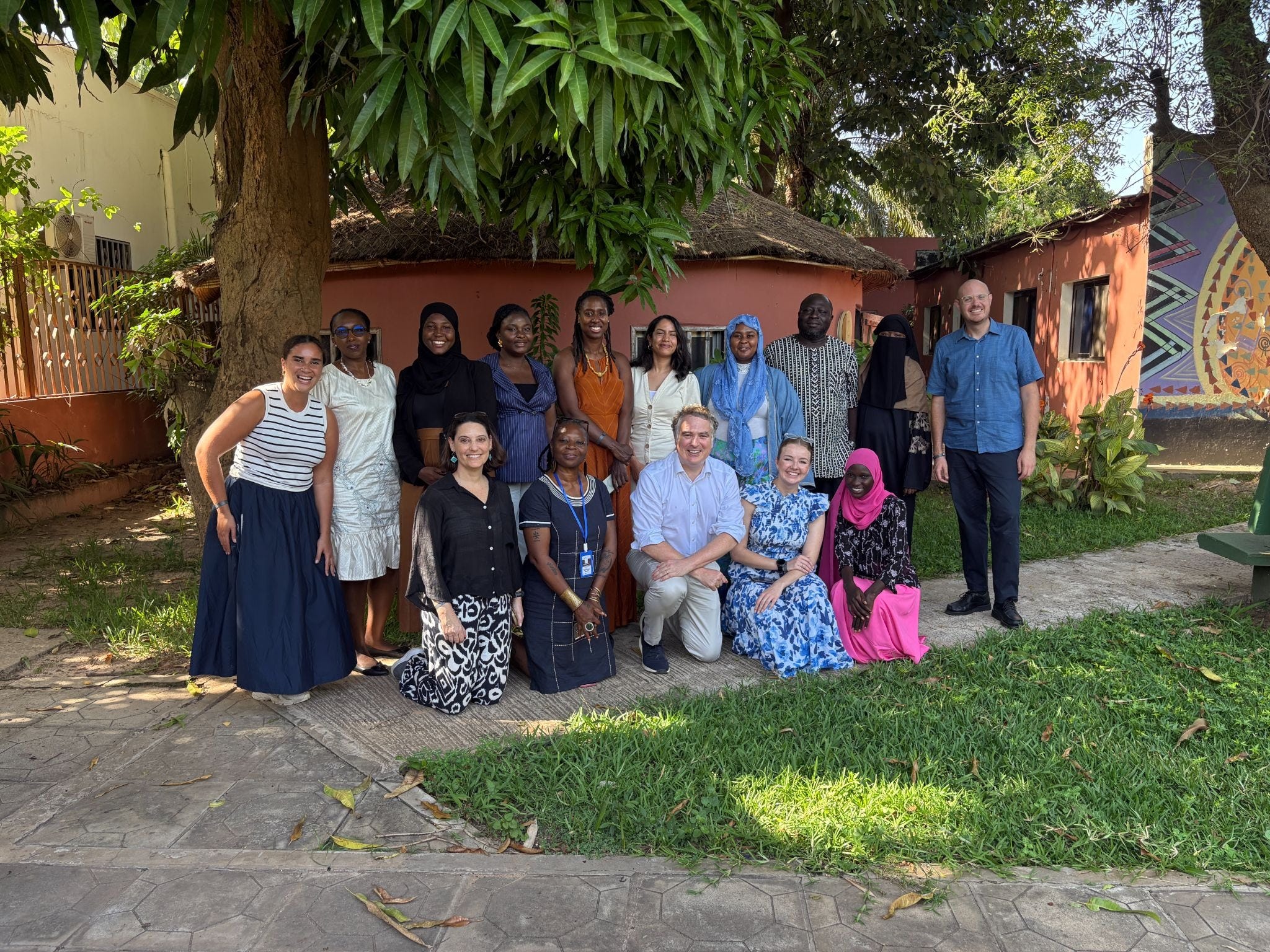
Our visit to The Gambia reaffirmed how powerful these processes can be when rooted in community and supported by decision-makers willing to listen. For DemocracyNext, it’s another step in our mission to build new democratic institutions where citizens have a meaningful role in shaping collective decisions.
We left The Gambia inspired - by the courage of local organisers, the openness of public officials, and the citizens who showed that democracy’s next chapter must shift power to the people.
📡 On the radar
Jigsaw explores how AI can help people guide better conversations in this new report.
Watch People Powered’s new video showing how Amazonian communities are leading climate action through participatory democracy and cultural power.
A community assembly now runs the New Art Exchange in Nottingham, giving residents the real power to shape a gallery once seen, but not belonging to them.
DemocracyNext International Advisory Council Member, Hugh Pope, has written some reflections from the Democracy R&D conference in Brussels last month.
Thanks to House of Beautiful Business for the mention in their piece ‘When Democracy Gets Weird’ about our DelibTech work - read it here. Claudia will be speaking about this at their upcoming World Beautiful Business Forum in Athens in May.
🍂 Events
17 November, FARI, Brussels
Our CEO, Claudia Chwalisz, will be taking part in a session as part of the FARI Conference 2025. She will be discussing, ‘Regulating and governing AI and Robotic agents’, alongside Gregory Lewkowicz, Jarmo Eskelinen, and Ronald Leenes.
23 & 24 January, Berlin, Germany
Claudia will be hosting a workshop with Kyle Redman from the AI & Democracy Foundation on deliberative technology during the Political Tech Summit.
Great to see this happening