

What if Your Community Called the Shots?
A conversation with Citizens in Power's David Jubb and Saad Eddine Said on embedding citizen-led leadership in cultural organisations

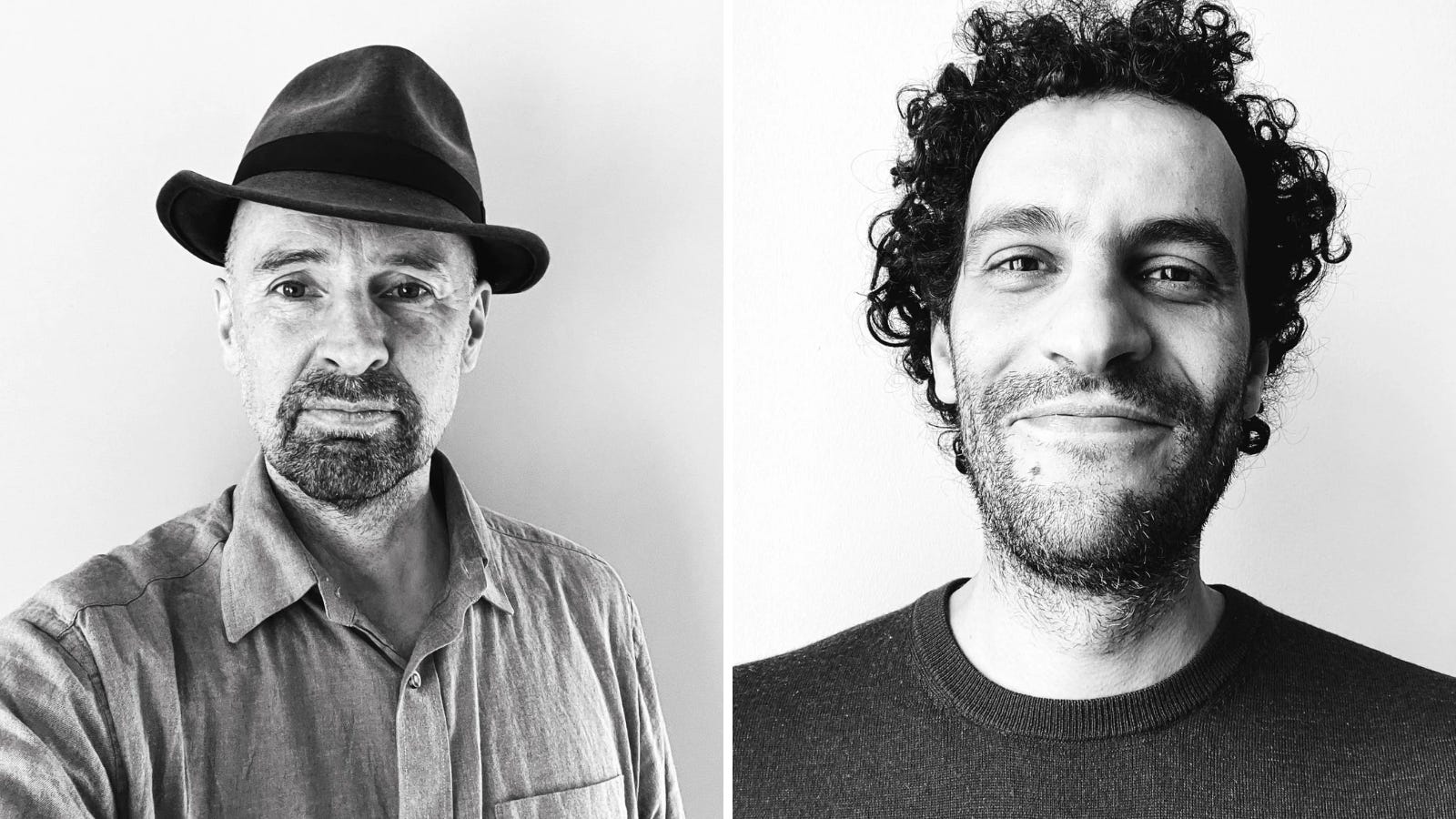
Lucy Reid, Chief Strategy & Creative Officer, DemocracyNext, spoke to David Jubb and Saad Eddine Said, Co-founders of Citizens in Power - a UK network of organisations committed to citizen-led decision making, mainly in the cultural and heritage sectors.
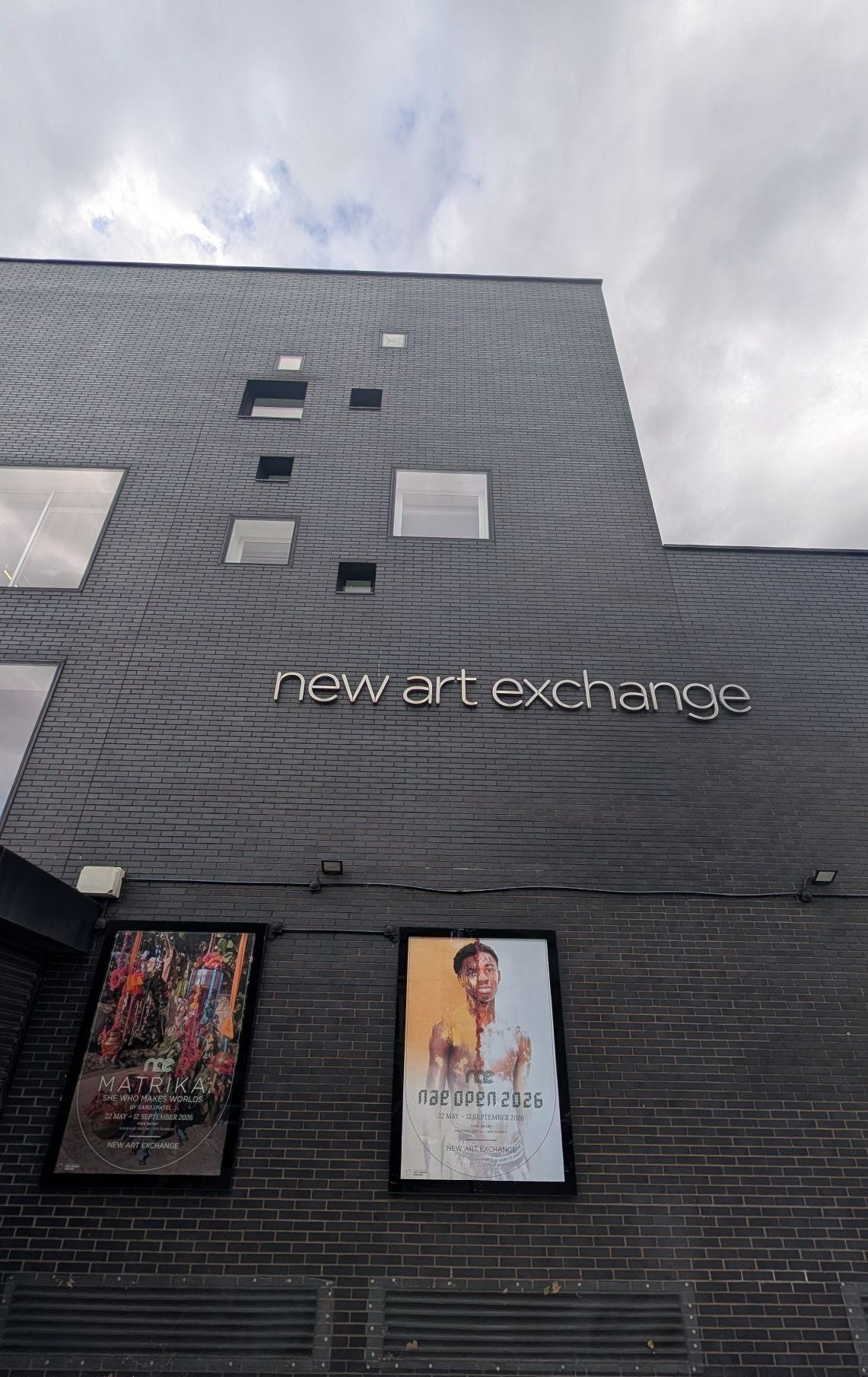
David and Saad met in 2017 while working at Battersea Arts Centre, and Citizens in Power launched in 2023. The network has since grown to around 100 organisations and associates across the UK. Saad is also the Chief Executive and Artistic Director of New Art Exchange in Nottingham, where Citizens in Power’s approach is being put into practice.
This interview was recorded as part of our interview series with leaders in democratic innovation for our Another Democratic Future Spotify podcast. Listen to previous episodes and subscribe here.
The following has been edited for clarity and brevity. Listen to or watch the full interview on Spotify or YouTube.
LR: Can you tell us a bit about Citizens in Power and where the network has come from?
DJ: Saad and I met in 2017, both working in the cultural sector at Battersea Arts Centre in southwest London. Even though we come from very different backgrounds - different faith backgrounds, different socioeconomic backgrounds, different ethnic backgrounds - we shared a real sense of unfairness in the cultural sector. Like many sectors, its governance, funding and policymaking tends to favour particular communities and systematically excludes others. And that’s not just a representation problem, though representation is a big issue. It’s also about the way decisions are made.
The charitable model we’re still using today is around 170 years old, invented around 1850. Even where there’s ethnic diversity on boards, there’s often very little socioeconomic diversity. So we got interested in citizen-led decision making, and we think it really comes down to three key ingredients.
The first is authority gathering. Before you run any process, you need to gather the necessary authority to even be able to ask the question in the first place - from your funders, your board, your staff, your volunteers, and community-led organisations locally. Unless you do that work, the danger is you end up with an answer to your question but no real impetus to actually deliver those outcomes. You create a report, you have a bunch of answers, but you can’t deliver them.
The second is some form of lottery - a random selection process to choose a representative sample of people. Without that, it’s hard to claim legitimacy. We use jury service all the time, so this isn’t new. But you have to work much harder than just the sortition process itself. You’ve got to think about who won’t get the invite, or who won’t respond to it - people who don’t have a letterbox, people for whom English isn’t their first language, and so on. That up-front work is really important.
The third is deliberation rather than debate. Debate, literally from the old French debatre, means to beat down. Even in a very civilised board meeting where everyone is being polite, it’s still a conflict-based model - people putting ideas forward, debating their strengths and weaknesses, with all the subtle and invisible power dynamics that brings. Deliberation means literally to weigh something up as a whole. Everyone needs to listen to each other, look at a topic in its entirety. You’re celebrating difference and diversity, because you need all of that on the table before you can build a consensus. That’s where the innovative solutions come from.
We then set up a network - we thought it might just be me and Saad and a couple of other people, but it’s now around 80 organisations across the UK. It’s really a three-year learning journey through to the end of 2027, and we’ve got a lot to learn. It’s almost like an action-learning set at the heart of the network.
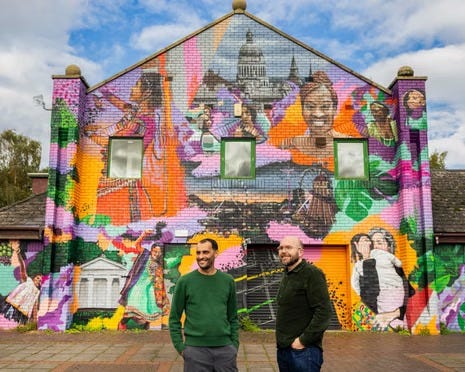
LR: How does it work in practice? Saad, can you tell us about the journey at New Art Exchange (NAE)?
SES: One of the things we always say is that engaging with this kind of work is like going on a journey where you may never get to the destination. It’s an ongoing, dynamic process - not a solution you arrive at. And when we talk about communities, it’s a word that means something different to each of us, and it also changes depending on what room you’re in. It’s a really, really complex environment.
At NAE, our ambition was never to put a permanent citizens’ assembly in place - that was just a tool. The ambition was for NAE to become a model of citizen-led organisation, meaning citizen leadership embedded across the whole organisation, not just in one process. And we decided that to count as citizen-led decision making, it had to tick all three boxes David described. If it doesn’t, it’s not really citizen-led.
That’s led us to stop talking about governance and start talking about leadership. Governance is heavily legislated, and it’s a heavy word that holds power in itself. Leadership is something you can build more inclusively - it brings more people around the table more easily.
We’ve articulated a three-pillar leadership model.
The first pillar is citizens - whatever role they work in, whether that’s recruitment, building design, or programming. Their role is to keep us relevant: if NAE doesn’t bring community citizens in, we become irrelevant very quickly.
The second pillar is our executive team - we have the skills, we deliver excellence, that’s our mandate.
The third is the board - making sure we’re compliant. What we’ve found is that when we start talking about it this way, even our board begins to understand that this isn’t about taking their power away. It’s about adding to the table, not changing what’s on the table.
We also think of the journey in six stages - a six-year process of transformation. Year one was Reclaim: recognising power imbalances and committing to change. Year two was Elevate: structuring leadership roles that centre community authority. Year three was Transform: shifting from symbolic participation to embedded decision making, and when we embedded our citizens’ assembly. Now we’re heading into year four, Unleash: expanding citizen leadership into all areas of the organisation. The final two years are Renaissance and Nexus. Put the first four words together and they spell RETURN - which is really what we’re trying to do: return publicly-funded institutions to their original mission as service providers.
And then the third framework is what we call the Framework of Fives: Values, Operationalisation, Insights, Commitment, Engagement. Those five spell VOICE. It’s all about the voice of the people.
We’re now halfway through this six-year process, and we’re already seeing the data. Footfall has increased by 16% - three times the national average. Our reach into our local community is five times beyond what it was. We’ve quadrupled our reserves in the last three years, while the rest of the sector is in crisis. Our enterprise is breaking income records month after month - and it only does that when we give up the space to be led by the community. If values don’t drive growth, they can’t stay as legacy. But what we’re finding is that they do.
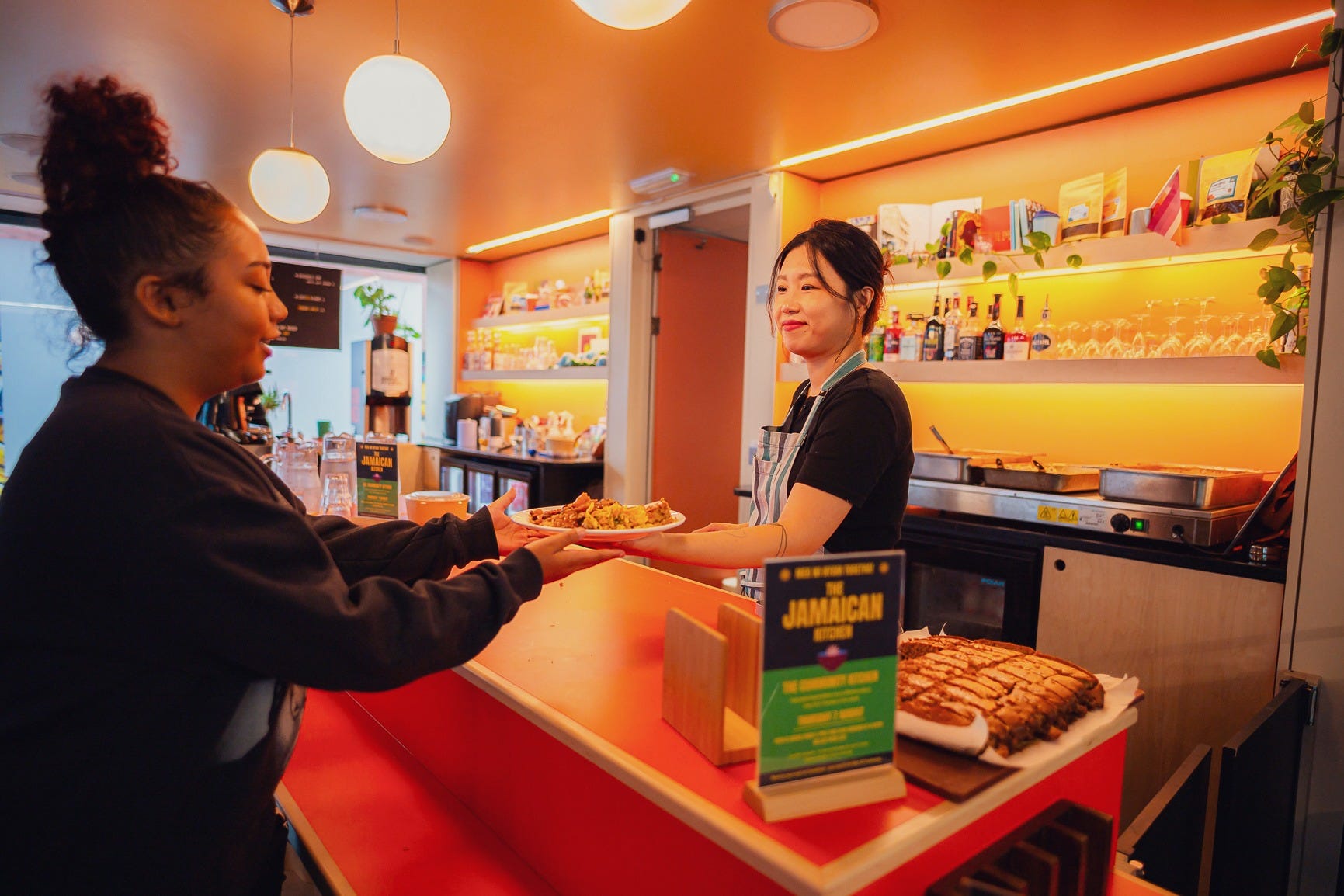
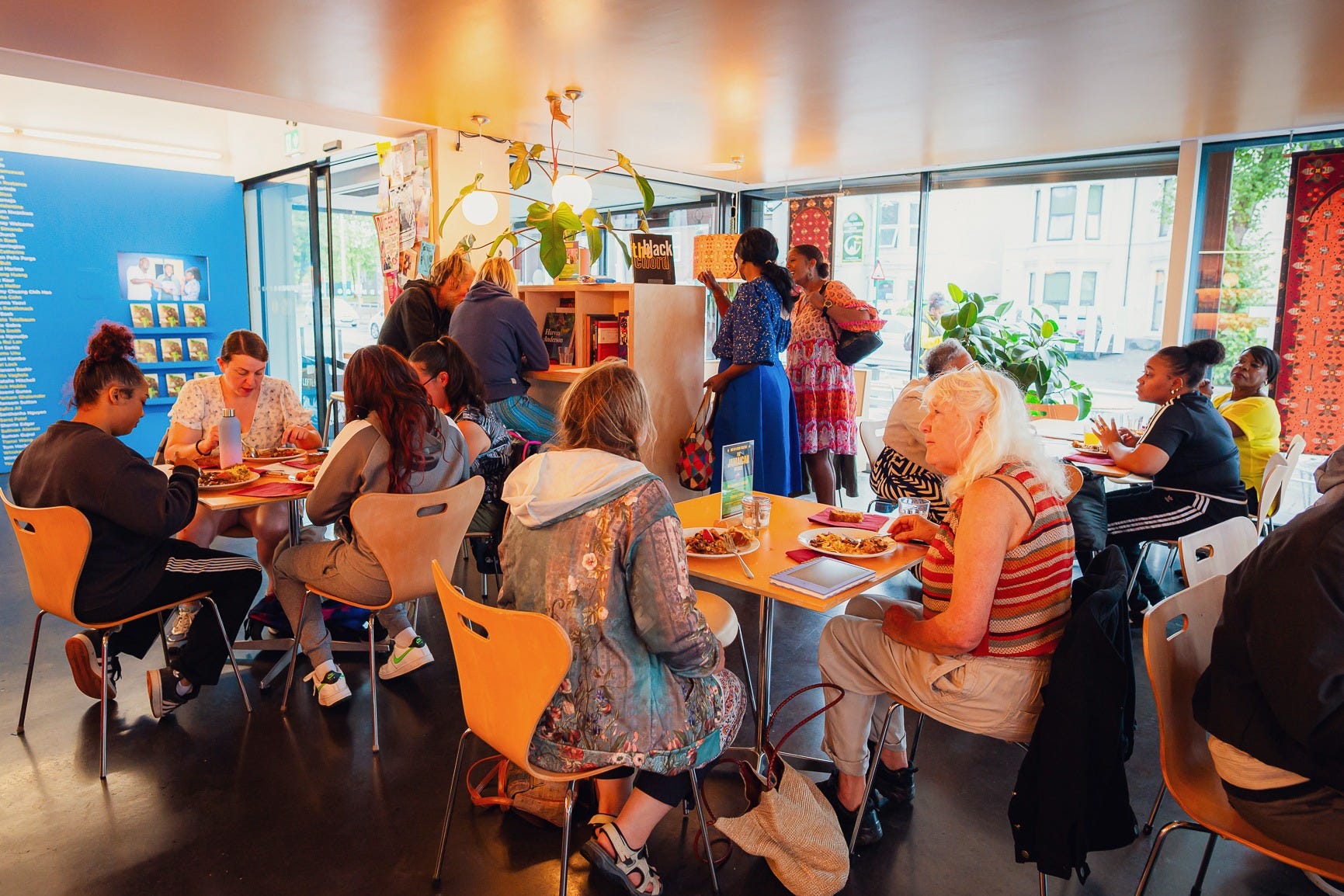
LR: That’s really heartening to hear - not just the commitment, but the numbers following through. Can you say more about the café?
SES: Yes - the café was redesigned through citizen-led decision making. Citizens took the key decisions, and we’ve done three community takeovers where citizens curated the whole event. We’re there to deliver excellence and support them, but it’s theirs. Each of those three events has set a new record income for NAE - and this is in the poorest neighbourhood in Nottingham, where spend per pocket is low. Last Saturday [February 2026] we doubled the record we’d set before.
When we started this journey, people told us it was risky, unwise, naive. We think it’s the opposite - it’s risky, unwise, and naive not to do this.
If you build citizen-led decision making properly and it takes hold, you start to build a kind of institutional resilience that’s very hard to undo.
I’m on a journey, and I know one thing: if someone makes the decision to cut our funding in five or six years, that’s not going to happen quietly. There will be thousands of people in the street, because it’s not our space - we’re just there to serve them.
LR: What are the limitations of what you’re building within current structures?
DJ: Whatever we’re doing is going to be a compromise. We’re all operating within faulty models. What NAE has done is incredible, but it’s sitting alongside a charitable model which ultimately relies on a chair and a CEO who are on board with it. New chair, new CEO, new trustees, new direction - that’s not a sustainable foundation.
Until we’ve embedded some of this stuff as alternative structures - structures that organisations can actually choose, the way you might choose a CIC or a CIO - it’s all going to be temporary. Imagine the day when you’re setting up an organisation and the list includes something that means citizen-led. Until that exists, whatever we build will be brilliant and valuable, but it will also be vulnerable.
SES: I couldn’t agree more. What NAE is doing is relying on its success. It would not survive a failure. I’m very conscious of that - one failure, and all those doors close. The doors are open because we’re delivering. And if there’s a change of strategic direction from a key funder, that’s an entirely different problem that no assembly can protect you from. So, yes: important work, but not yet durable in the way we’d want it to be.
LR: What advice would you give to an organisation thinking about starting this journey? Where do you start?
SES: Start from a position where risks, confidence, and expertise all grow in parallel. At NAE, we started with £10,000 and asked six randomly selected strangers to decide how to spend it on a commission. Whoever they chose, we gave them the money. The following time, £30,000. Then we brought in a panel to decide our next two years of solo exhibitions - which is huge for an organisation like ours. And then we went with whoever they decided on.
We waited two years before recruiting our full citizens’ assembly, because we knew we’d be starting from a place of non-confidence - we’d never done anything like this before.
So we made small promises, delivered on them, made bigger promises, delivered on those, and slowly built ambassadors in the community. Trust is not something you win. It’s something you need to work for, something you need to gain - and it can go very quickly. Making small promises and delivering is as simple as it sounds, and as hard.
In terms of where to start the question: what is the space that is the biggest but also the smallest place to begin? You want to be challenging yourself, not starting from somewhere comfortable - but it can’t be so ambitious that you can’t deliver.
DJ: From a network perspective, it’s also worth thinking about who facilitates these processes. Citizens’ assemblies and juries have historically tended to favour auditory learners - a lot of teaching and presenting to people. That’s one learning modality. We need to think about how you create a deliberative environment that is deeply inclusive across how people learn and engage, and that also means the designers and facilitators of the process need to reflect that diversity too. Shared Future, who have been facilitating citizens’ juries for decades, have been doing a lot of work on this, and we’re doing a piece of work with them to expand that group of facilitators.
LR: How do you build community confidence in the process itself? How do you get people to want to take ownership of it?
SES: It goes back to the same thing - start from a small seed. Build proof of concept before you ask people to take a leap. We started with £10k and six strangers. The fact that we did what those six people decided - and made it visible that we did - was what started to shift things. When we brought in a panel to decide two years’ worth of exhibitions, that was the moment the community really started to believe that NAE was serious. By the time we recruited the full assembly, people had seen us deliver, and that changed everything.
Trust takes a lot to gain and can go very quickly. So: make a small promise, deliver. Make a bigger promise, deliver. And if you’re bringing your assembly together and asking them to decide - make sure you are genuinely going to deliver on what they say. If you’re not in a position to do that, just don’t do it.
Listen to the full interview on Spotify or YouTube. Read this article from The Guardian exploring NAE’s citizen-led work, or explore the NAE website for the blueprint, booklet, report, and documentary.
Citizens in Power wants to hear from other organisations across the UK who are either already working with their community on decision making projects, or needing support in launching citizen-led campaigns. Find out more here.
Citizens in Power June residency
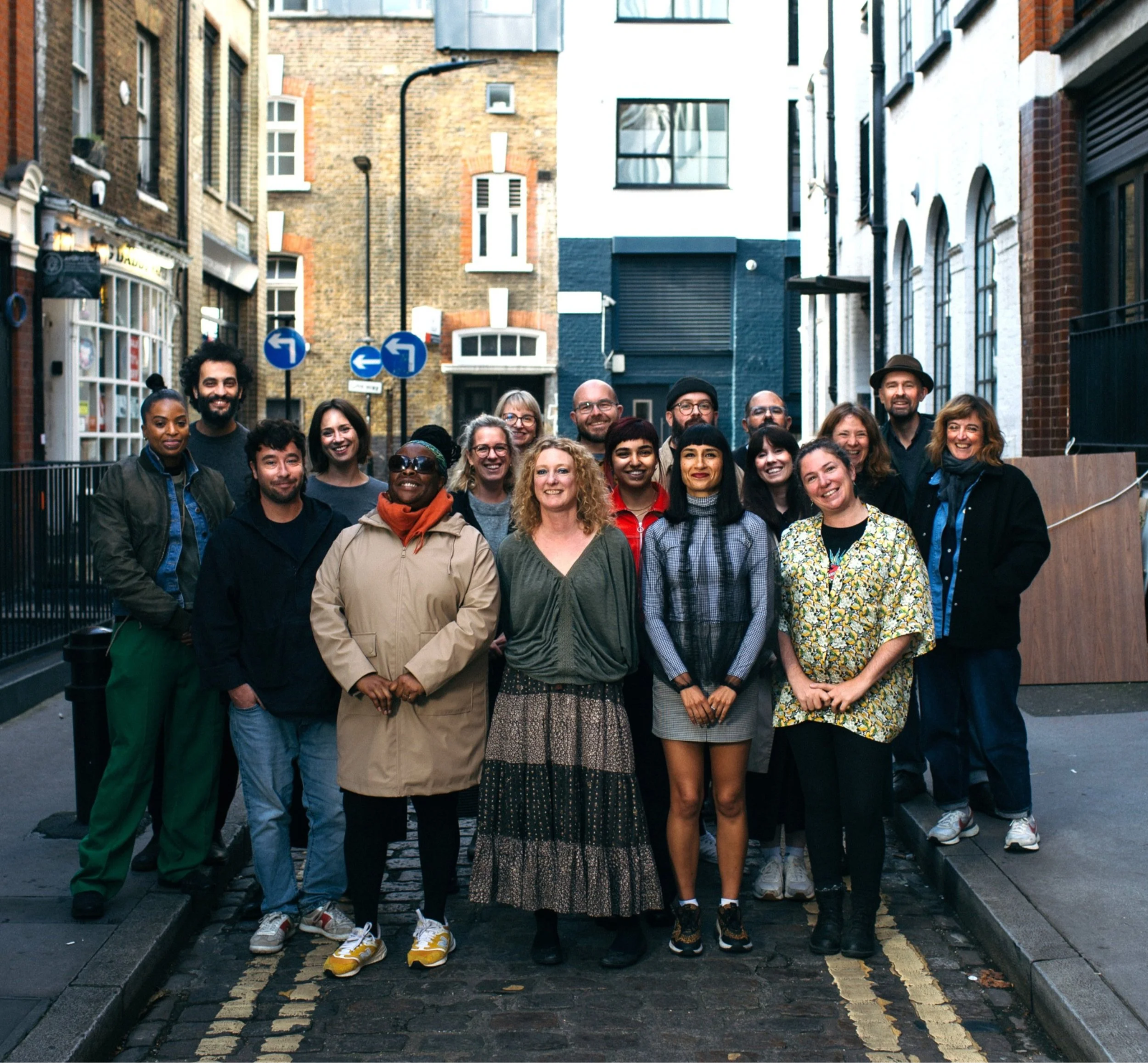
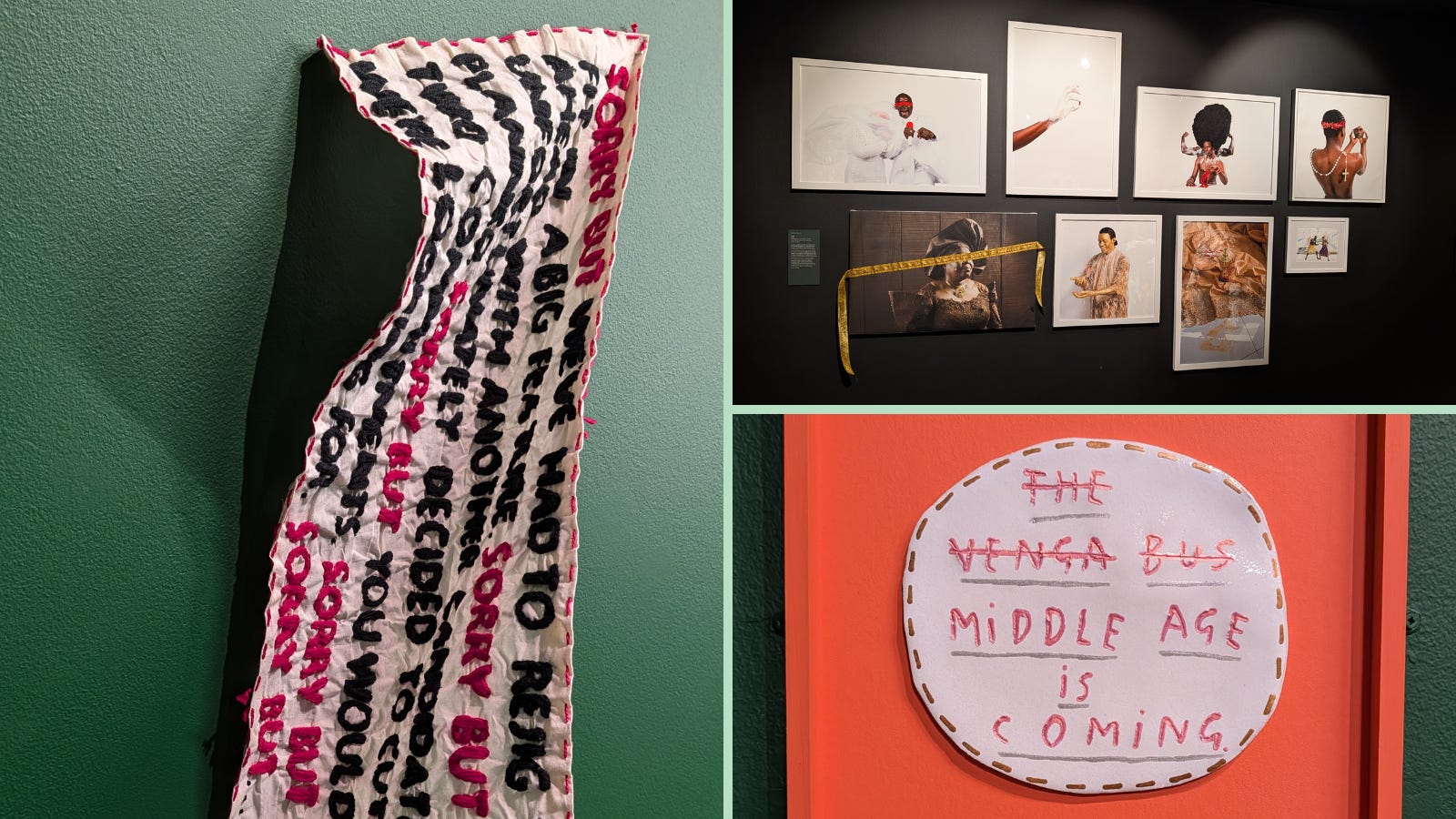
Earlier this month, Ruba and Lucy joined the core group from the Citizens in Power network at New Art Exchange in Nottingham for their bi-annual residency - two days of updates and collective thinking about what citizen-led leadership can look like in practice.
Members shared updates on the projects and campaigns they’re driving forward, and turned attention to the network’s own future. A particular highlight was meeting three Voice Assembly members who spoke about their experiences and ongoing work with NAE - shaping the gallery’s direction and future plans from the inside.
One word was of particular focus for this residency: power. How do you bring people and organisations into the same room? How do you reach those who don’t trust a lottery invitation? How do you bring care into democratic design - and creativity into decision making? How can you work to embed citizen-led decision making into organisational DNA? And what changes when citizens don’t just have a voice, but actual resources, budgets, and commissioning power to act on their ideas?
These aren’t abstract questions. Seeing the decisions of Nottingham citizens made real at the gallery - not least in the beautiful (and busy) café - was a reminder of what’s possible when that power is genuine. The visit also coincided with NAE’s increasingly popular OPEN exhibition, celebrating Nottinghamshire-based artists and Global Ethnic Majority artists from across the UK.
➡️ On the radar
🇬🇧 The Marshall Plan For Civic Life - launched by Kinship Works and Demos as an open invitation - to be part of building a coalition that works together to develop a sustainable funding settlement for the revival of civic life in Britain.
🇧🇪 Sortition Goes Back Further in Brussels - Hugh Pope, DemocracyNext’s International Advisory Council Member, uncovers a surprisingly deep history of sortition in 14th-century Brussels.
📄 Blueprints for Democratic Wellbeing - This new report by Oliver Escobar and Stephen Elstub outlines ways to institutionalise citizens’ assemblies in the UK’s parliaments.
💻 People Powered have launched the Democracy Stories Lab, an open call for creators anywhere in the world to share visual content (short videos, illustrations, or graphics) that tells a compelling story about a more democratic future.
🗓️ Events
In July, DemocracyNext will be publishing two new papers, and we invite you to join us online for discussions around them:
💪 Deliberative Muscles & AI: Thursday 9 July, 17:00-18:30 CEST
How can deliberative technology strengthen citizens’ democratic capacities to deliberate? This is the question authors Claudia Chwalisz, Sammy McKinney, Jorim Theuns, and Eugene Yi have been considering in our latest paper: “Deliberative Muscles & AI”. We will also be joined by Lisa Gutermuth, Senior Program Officer, Mozilla Foundation, Maggie Hughes, MIT Center for Constructive Communication, and Mauricio Mejia, advisor on democratic change.
🏙️ From Projects to Permanence: Citizens’ Assemblies as New Democratic Institutions in Cities and Regions: Wednesday 15 July, 17:00-18:30 CEST
As our Cities Programme comes to a close, James MacDonald-Nelson and Hannah Terry examine in greater detail the learnings from working with cities and regions to institutionalise citizens’ assemblies - Vilnius (Lithuania), Kerewan (The Gambia), Esch-Sur-Azette (Luxembourg), and Central Oregon (USA).